Dishwasher Not Filling with Water? Complete Troubleshooting Guide
When your dishwasher won't fill with water, it simply can't wash your dishes. This is one of the most common and frustrating dishwasher problems, but in many cases, it can be fixed without professional help.
At JK Appliances Toronto, we've diagnosed and repaired thousands of dishwasher water fill issues across the Greater Toronto Area. This comprehensive guide covers all the reasons your dishwasher isn't getting water and how to fix them.
Quick Answer: Is your dishwasher not getting water? Learn how to diagnose water inlet valve, supply line, and float switch problems for all major brands including Bosch, Samsung, LG, and Whirlpool.
How Your Dishwasher Fills with Water
Understanding the fill system helps with diagnosis:
Water Fill Components:
- Water Supply Valve - Under-sink shut-off valve
- Water Inlet Hose - Connects supply to dishwasher
- Water Inlet Valve - Electronic valve on dishwasher
- Float Switch - Safety device preventing overfill
- Flow Meter - Measures water entering
- Control Board - Sends fill signal
The Fill Sequence:
- You start a cycle
- Control board signals inlet valve to open
- Water flows through inlet hose to dishwasher
- Float rises as water fills
- Flow meter or timer determines fill amount
- Control board signals valve to close
- Wash cycle begins
Quick Diagnosis: Why No Water?
Complete Fill Failure:
- No water enters at all
- Dishwasher sits empty
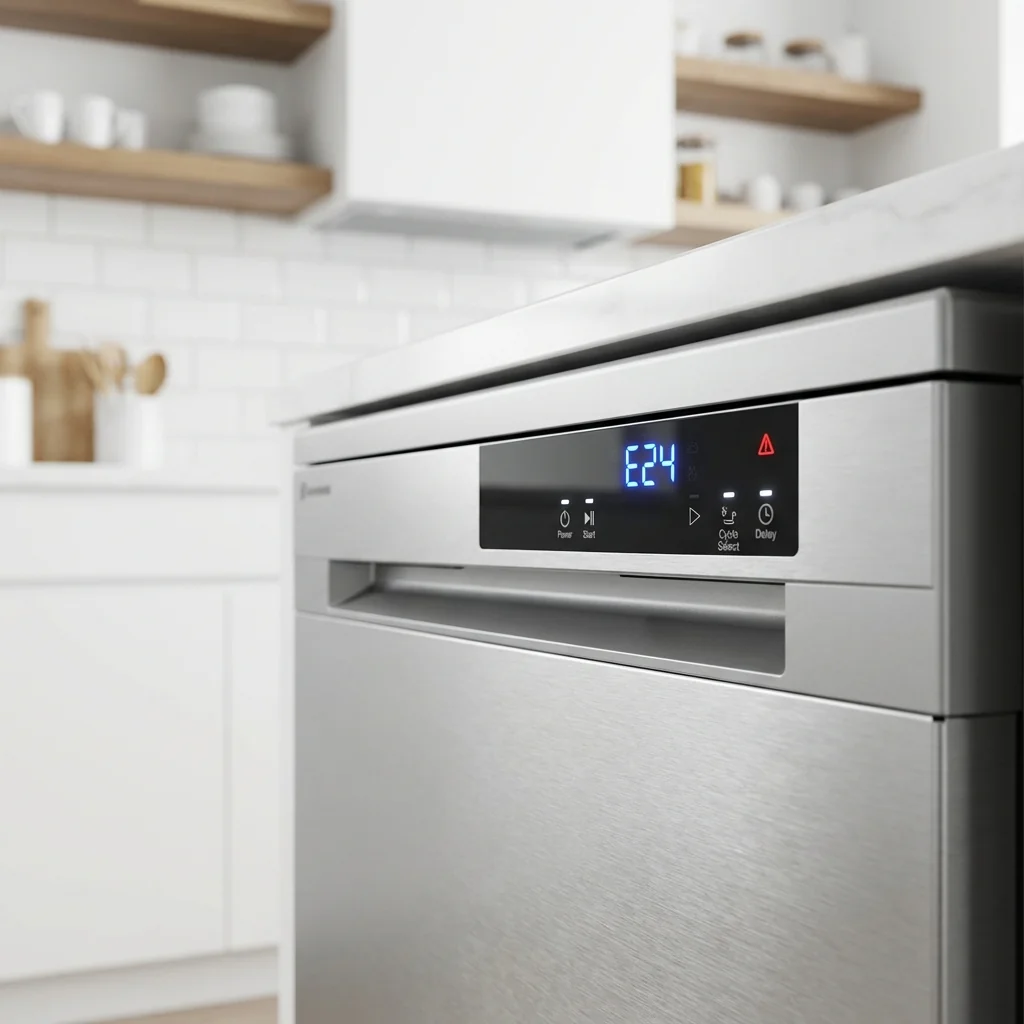
- May show fill error code
Common Causes:
- Water supply turned off
- Kinked inlet hose
- Failed water inlet valve
- Control board issue
Partial Fill Issues:
- Some water enters but not enough
- Poor wash performance
- Extended cycle times
Common Causes:
- Low water pressure
- Clogged inlet screen
- Partially failed valve
- Float switch stuck
Intermittent Fill Problems:
- Works sometimes, fails others
- Random fill behavior
Common Causes:
- Loose connections
- Intermittent valve failure
- Float switch sticking
Solution 1: Check the Water Supply
The Most Common Cause: The water supply to the dishwasher is simply turned off or restricted.
Supply Valve Check:
-
Locate the supply valve
- Under the kitchen sink
- Usually on hot water line
- May be a lever or round handle
-
Verify valve is open
- Lever: parallel to pipe = open
- Round handle: counterclockwise for open
- Open fully (all the way)
-
Test water flow
- Place bucket under valve
- Carefully loosen hose connection
- Water should flow freely
-
Check for corrosion
- Old valves can seize internally
- May appear open but blocked
- Replace corroded valves
Water Supply Troubleshooting:
If valve seems open but no water:
- Valve may be internally corroded
- Main water supply may be off
- Check other faucets for flow
If water flows from supply:
- Problem is past the valve
- Check inlet hose and dishwasher
Solution 2: Inspect the Water Inlet Hose
The Problem: The inlet hose connects the supply valve to the dishwasher. Kinks, freezing, or damage prevent water flow.
Inlet Hose Inspection:
-
Visual inspection
- Follow hose from supply to dishwasher
- Check for kinks or sharp bends
- Look for crushing or damage
-
Check for ice (winter)
- Hoses in exterior walls can freeze
- Thaw carefully if frozen
- Consider insulation
-
Disconnect and test flow
- Turn off supply valve
- Disconnect hose at dishwasher
- Place in bucket and open valve briefly
- Water should flow freely
-
Check hose screens
- Both ends may have screens
- Remove and clean any debris
- Reinstall screens after cleaning
Inlet Hose Replacement:
When to Replace:
- Visible damage or cracks
- Kinked permanently
- More than 5 years old
- Stainless braided recommended
Replacement Cost: $15-$40 for hose
Solution 3: Test and Clean the Water Inlet Valve
The Problem: The water inlet valve is an electrically controlled solenoid valve. When it fails, no water enters.
Water Inlet Valve Location:
- Bottom front of dishwasher
- Behind lower access panel
- Where inlet hose connects
Inlet Valve Diagnosis:
-
Listen for valve activation
- Start a fill cycle
- Listen at bottom of dishwasher
- Should hear click and water flowing
- No sound = possible valve failure
-
Check for voltage
- Disconnect power
- Remove access panel
- Locate valve terminals
- Reconnect power briefly
- Test for 120V during fill (use caution!)
-
Test valve solenoid
- Disconnect power
- Remove wires from valve
- Use multimeter on resistance
- Normal: 500-1500 ohms
- Infinity/no reading = failed coil
Cleaning the Inlet Valve Screen:
- Turn off water supply
- Disconnect inlet hose
- Locate screen inside valve inlet
- Remove screen carefully (needle-nose pliers)
- Clean debris and mineral deposits (soak in vinegar)
- Reinstall screen
- Reconnect hose
- Turn on supply and test
Inlet Valve Replacement:
Signs You Need Replacement:
- No continuity through solenoid
- Valve doesn't click/activate
- Leaking from valve body
- Valve humms but doesn't open
Replacement Cost:
- Part: $40-$80
- Professional installation: $150-$225
Solution 4: Examine the Float Switch
The Problem: The float switch is a safety device that prevents overfilling. If stuck in the "up" position, the dishwasher thinks it's full and won't fill.
Float Switch Location:
- Bottom front corner of tub
- Cylindrical component that moves up/down
- Connected to switch below floor
Float Switch Inspection:
- Remove bottom dish rack
- Locate float dome/cylinder
- Push down on float
- Should move freely up and down
- Should spring back up slightly
- Check for obstructions
- Food debris around float
- Utensils fallen near float
- Items wedged underneath
Float Switch Cleaning:
- Remove float cover (if applicable)
- Clean around float thoroughly
- Remove any debris preventing movement
- Check float housing is clean
- Test free movement up and down
- Reinstall cover
Float Switch Testing:
-
Access the float switch
- Remove lower access panel
- Locate switch below float assembly
-
Test switch operation
- Push float up manually
- Listen for click from switch
- Use multimeter to test continuity
- Should toggle as float moves
-
Replace if faulty
- Switch doesn't click
- No continuity change
- Cracked or damaged
Replacement Cost:
- Part: $20-$50
- Professional: $100-$175
Solution 5: Check the Door Switch
The Problem: The door switch must signal "closed" before water can fill. A faulty door switch prevents operation.
Door Switch Testing:
-
Close door and start cycle
- Do you hear any activity?
- No response at all = possible door switch
-
Test door switch
- Disconnect power
- Access door switch (behind control panel or latch)
- Use multimeter on continuity
- Should show continuity when pressed
-
Check door alignment
- Door fully engaging latch
- Switch being properly triggered
Door Switch Solutions:
- Adjust door alignment if needed
- Replace faulty door switch
- Check wiring to switch
Replacement Cost:
- Part: $15-$35
- Professional: $100-$150
Solution 6: Test Water Pressure
The Problem: Low water pressure means the inlet valve can't draw enough water.
Minimum Requirements:
- 20 PSI minimum
- 120 PSI maximum
- Ideal: 40-60 PSI
Pressure Testing:
-
Kitchen faucet test
- Turn on hot water fully
- Note pressure level
- Low pressure = home issue
-
Measure with gauge
- Attach pressure gauge to hose bib
- Record PSI reading
- Below 20 PSI = problem
Low Pressure Solutions:
- Check main water valve fully open
- Inspect for water leaks reducing pressure
- Consider pressure booster pump
- Contact water utility if neighborhood issue
Brand-Specific Fill Issues
Bosch Dishwashers
Common Fill Issues:
- Aquastop system blocking water
- Flow sensor failures
- Water break activated
Error Codes:
- E3: Fill timeout
- E17: Overfill
- E18: Flow sensor issue
Solutions:
- Check Aquastop hose if equipped
- Reset Aquastop system
- Clean flow sensor
Samsung Dishwashers
Common Fill Issues:
- Water inlet valve failure
- Leak sensor falsely triggered
- Float switch debris
Error Codes:
- 1E: Water inlet error
- 4C/4E: Water fill problem
- LC/LE: Leak detected (stops fill)
Solutions:
- Reset by power cycling
- Check for actual leaks
- Clean inlet valve screen
LG Dishwashers
Common Fill Issues:
- Inlet valve solenoid failure
- Flow meter problems
- Float assembly issues
Error Codes:
- FE: Overfill error
- IE: Water inlet error
Solutions:
- Test inlet valve electrically
- Clean flow meter if accessible
- Inspect float movement
Whirlpool/KitchenAid Dishwashers
Common Fill Issues:
- Inlet valve common failure point
- Float switch sticking
- Control board communication
Error Codes:
- F6E1: Water inlet valve
- F6E4: No water flow
- F8E6: Fill timeout
Solutions:
- Replace inlet valve if testing shows failure
- Clean float assembly
- Check control board connections
GE Dishwashers
Common Fill Issues:
- Inlet valve failure
- Pressure switch issues
- Timer/control problems
Error Codes:
- Flashing lights pattern
- PF after power failure
Solutions:
- Test inlet valve
- Check float switch
- Power cycle to reset
Miele Dishwashers
Common Fill Issues:
- Aquastop/WaterProof system activation
- Flow meter calibration
- Inlet valve failure
Error Codes:
- F12/F13: Water intake error
- F18: Water flow error
- F68/F69: Aquastop fault
Solutions:
- Reset Aquastop system
- Check for actual leaks first
- Professional diagnosis often needed
Preventive Maintenance
Monthly:
- Check float moves freely
- Inspect for debris in tub bottom
- Verify water jets spray properly
Quarterly:
- Clean inlet valve screen
- Inspect supply hose
- Check supply valve operation
Annually:
- Replace inlet hose (if older)
- Professional inspection
- Test water pressure
When to Call a Professional
Professional Help Needed:
- Inlet valve replacement required
- Control board suspected
- Aquastop system issues
- Electrical testing beyond comfort level
- Water damage occurring
Professional Repair Costs:
- Diagnostic: $90 regular brands, $110 high-end brands; +$40 after-hours (waived with repair)
- Inlet valve replacement: $150-$225
- Float switch replacement: $100-$175
- Control board: $200-$450
- Water pressure issues: May need plumber
Professional Dishwasher Service Toronto
Same-Day Service Available: At JK Appliances, we diagnose and repair water fill issues quickly.
Service Advantages:
- All major brands serviced
- Certified technicians
- 180-Day Warranty (parts & labour)
- Transparent pricing
Service Areas:
- Downtown Toronto
- North York
- Scarborough
- Etobicoke
- Mississauga
- Brampton
- Markham
- Richmond Hill
- Vaughan
- Ajax
- Oakville
- Burlington
If the tub still won't fill once you've confirmed the supply valve is fully open, the inlet valve or float switch is the next thing to test. Book a water fill repair.
Frequently Asked Questions About Dishwasher Water Fill Problems
Q:Why isn't my dishwasher filling with water at all? A: Complete fill failure is usually caused by one of four issues: the water supply valve under the sink is turned off, the inlet hose is kinked or blocked, the water inlet valve has failed electrically, or the float switch is stuck in the "up" position signaling the dishwasher is full. Start by checking that your under-sink shutoff valve is fully open—this is the most common cause. If the valve is open, disconnect the inlet hose and check for water flow from the supply line.
Q: How can I tell if my dishwasher water inlet valve is bad? A: A failed water inlet valve shows several symptoms: no clicking sound when the cycle starts, no water entering even with good supply pressure, or water slowly dripping in when the valve should be closed. To test, disconnect power and use a multimeter to check the valve solenoid for continuity—it should read 500-1500 ohms. If you get an infinite reading or no continuity, the valve coil has failed and needs replacement. Listen carefully when starting a cycle—you should hear a distinct click as the valve opens.
Q: Why does my dishwasher only fill partially with water? A: Partial filling is typically caused by low water pressure (below 20 PSI), a clogged inlet valve screen, a partially failed water inlet valve, or a stuck float switch. Check your home's water pressure by running the kitchen faucet at full hot water—if flow is weak, you have a pressure problem. Remove and clean the small screen inside the inlet valve connection, as mineral deposits and debris commonly restrict flow here.
Q: Can I fix a dishwasher not filling with water myself? A: Yes, many water fill issues are DIY-fixable. You can safely check the water supply valve, inspect and replace the inlet hose, clean the inlet valve screen, and test the float switch movement. However, replacing the water inlet valve requires disconnecting water lines and removing the dishwasher's lower panel, which is moderately difficult. Testing with a multimeter is safe if power is disconnected. If you're uncomfortable with electrical testing or water line work, call a professional.
Q: How do I reset my dishwasher if it won't fill? A: For most dishwashers, perform a hard reset by unplugging the unit (or turning off the circuit breaker) for 5 minutes, then restoring power. This clears temporary electronic glitches and resets the control board. After resetting, try starting a new cycle. If the dishwasher has a specific reset procedure (check your manual), follow that instead. Samsung dishwashers often require pressing and holding specific button combinations for 3 seconds.
Q: Why does my dishwasher make a humming sound but not fill? A: A humming sound from the bottom of the dishwasher indicates the water inlet valve is receiving electrical power and trying to open, but water isn't flowing. This points to either very low water pressure (valve can't open against low pressure), a completely clogged inlet valve screen, or a stuck/jammed valve that hums but doesn't mechanically open. Check your water supply first, then clean the inlet screen. If both are fine, the valve mechanism itself is likely seized and needs replacement.
Q: How much does it cost to fix a dishwasher that won't fill? A: DIY repairs cost $15-80 for parts (inlet hose $15-40, inlet valve $40-80, float switch $20-50). Professional repair in Toronto typically costs $150-225 for inlet valve replacement, $100-175 for float switch replacement, or $90 regular brands, $110 high-end brands; +$40 after-hours for a diagnostic visit (usually waived if you proceed with repairs). If the control board is the issue, expect $200-450 for replacement. Most water fill issues are inlet valve failures, making the average professional repair around $175-200.
Q: Will a dishwasher start if it's not getting water? A: Most modern dishwashers will attempt to start but display an error code or flash lights indicating a fill problem. The dishwasher may make sounds (drain pump, wash motor attempting to run) but won't actually wash dishes without water. Some models have a fill timeout feature—they'll wait several minutes for water, then display an error and stop. Never proceed with a cycle if you know the dishwasher isn't filling, as running the wash pump dry can damage it.
Q: How long should it take for a dishwasher to fill with water? A: A dishwasher should complete its initial fill in 2-3 minutes under normal conditions. If filling takes longer than 5 minutes, you have low water pressure, a restricted inlet valve, or a partially clogged system. Most dishwashers fill to a specific level (about 1 gallon) initially, then add water as needed during the cycle. Listen at the beginning of a cycle—you should hear continuous water flow for 2-3 minutes.
Q: Can hard water cause my dishwasher not to fill? A: Hard water doesn't directly prevent filling, but mineral buildup from hard water clogs the tiny screen inside the water inlet valve over time. This restriction reduces flow and can eventually block it completely. If you have hard water, the inlet valve screen should be cleaned every 3-6 months. Look for white, crusty deposits on the screen—this is calcium and magnesium mineral buildup. Soak the screen in vinegar for 30 minutes to dissolve deposits.
Dishwasher not filling with water in Toronto? Contact JK Appliances at +1 647-560-8966 for professional diagnosis and same-day repair. We service all major dishwasher brands across the Greater Toronto Area!